
What is Artificial Neural Network ANN?
Introduction to ANNs in Deep learning.

Introduction
Artificial Neural Networks (ANNs) stand at the forefront of a revolution in artificial intelligence, offering a glimpse into a future where machines not only compute but also learn and evolve. These intricate networks, inspired by the neural pathways of the human brain, have become a fundamental component in the quest to imbue machines with the ability to mimic human thought processes.
In this exploration, we delve into the mechanics of ANNs, revealing how they function as the building blocks of complex decision-making systems in machines. By interconnecting a web of artificial neurons, ANNs process and interpret vast amounts of data, enabling machines to recognize patterns, make predictions, and solve problems in ways that were once the exclusive domain of human intelligence.
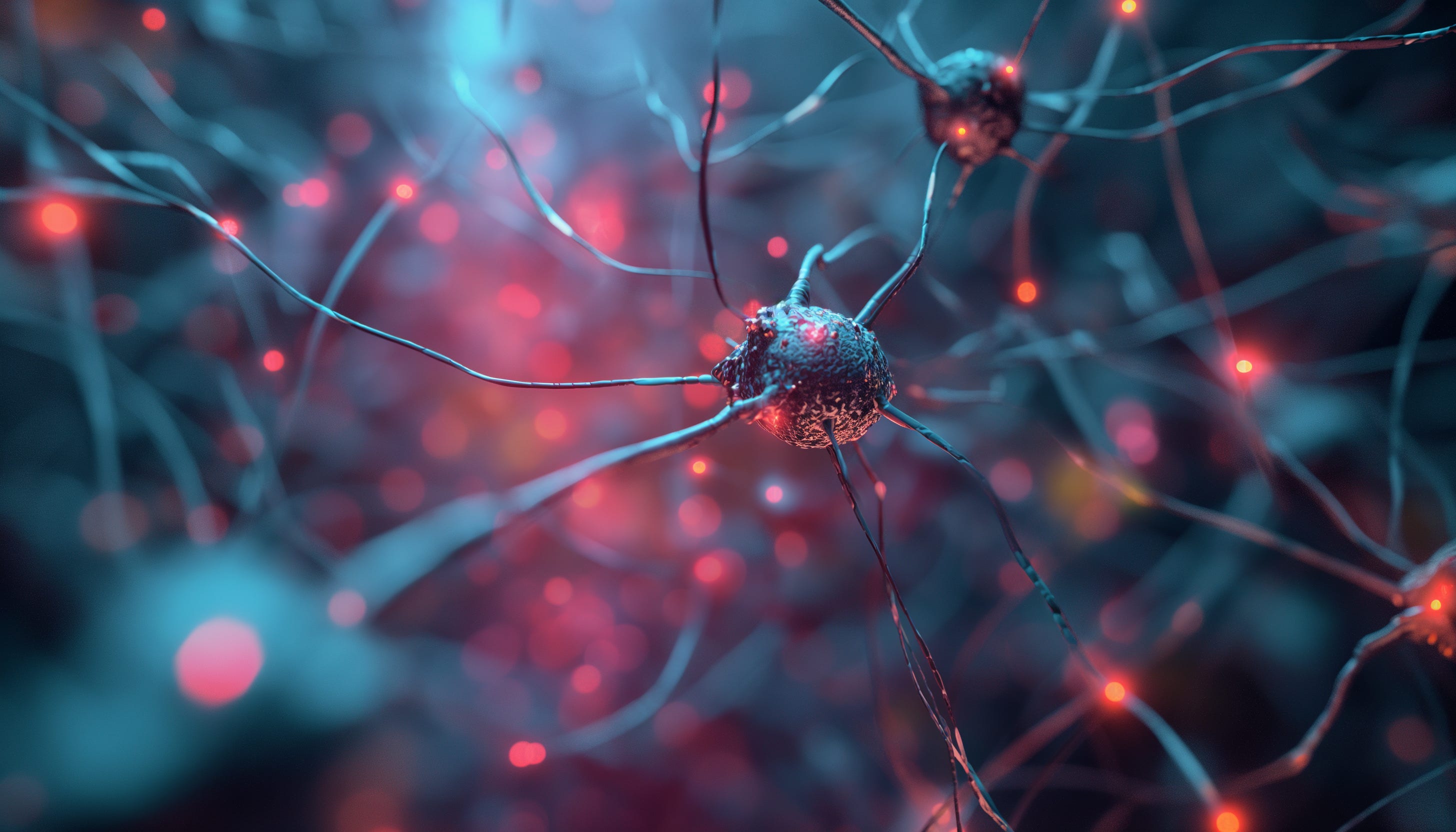
What is an Artificial Neural Network?
Definition and Basic Concept: An Artificial Neural Network (ANN) is a computational model inspired by the structure and functional aspects of biological neural networks found in the human brain. Essentially, it's a system of interconnected nodes, known as artificial neurons, which work together to process information. These networks are designed to simulate the way humans learn, recognize patterns, and make decisions, making them a cornerstone of artificial intelligence and machine learning.
Structure of ANNs: At the core of an ANN's structure are layers of interconnected nodes or neurons. These include an input layer, which receives the initial data, one or more hidden layers, where the processing and computation occur, and an output layer, which delivers the final result or decision. Each neuron in these layers is connected to others by 'synapses,' weighted pathways that determine the strength and direction of the influence between neurons. The process of learning in an ANN involves adjusting these synaptic weights, enabling the network to make increasingly accurate predictions or decisions over time.
History of ANNs
Early Concepts and Developments: The concept of artificial neural networks has its roots in the 1940s and 1950s, inspired by the desire to replicate human brain function in machines. Pioneers like Warren McCulloch and Walter Pitts laid the groundwork by creating a computational model for neural networks in 1943, which led to the development of the perceptron by Frank Rosenblatt in 1957. These early models were simplistic but set the stage for understanding how networks of artificial neurons could be used for pattern recognition and simple decision-making tasks.
Advancements and Challenges: The 1960s and 1970s saw both progress and setbacks in the field of neural networks. The initial excitement over the perceptron model waned as researchers like Marvin Minsky and Seymour Papert highlighted its limitations, particularly in handling complex problems like XOR logic gates. This period, often referred to as the first "AI winter," saw reduced interest and funding for neural network research. However, it also paved the way for key theoretical advancements, such as the backpropagation algorithm developed in the 1980s, which addressed some of the perceptron's limitations and revitalized research in neural networks.
The Revival and Modern Era: The late 1980s and 1990s marked a significant revival in neural network research, largely fueled by the backpropagation algorithm and increased computational power. This era witnessed the development of more sophisticated models like convolutional neural networks (CNNs) by Yann LeCun and others, which dramatically improved performance in tasks such as image and speech recognition. The resurgence of interest in ANNs, coupled with the explosion of data and advancements in hardware (like GPUs), has led to the current boom in AI, where neural networks are central to many cutting-edge applications and research.
Current Trends and Future Directions: In the 21st century, the field of artificial neural networks has seen unprecedented growth and innovation. Techniques like deep learning, which involves training large neural networks with many layers, have achieved remarkable success in complex tasks such as natural language processing, autonomous vehicle navigation, and medical diagnosis. Researchers are now exploring new frontiers in ANN design, including neural network architectures inspired by the latest understanding of the human brain, and investigating how these networks can be made more efficient, interpretable, and capable of unsupervised learning. The ongoing evolution of ANNs promises to continually redefine the boundaries of what machines can achieve.
Significant Milestones and Figures - a short list:
1943 - McCulloch and Pitts Model: Warren McCulloch and Walter Pitts conceptualized a computational approach to neural networks, forming the basis of what would become artificial neural networks.
1957 - The Perceptron by Frank Rosenblatt: Rosenblatt introduced the perceptron, an early neural network capable of basic pattern recognition, which laid the foundation for future developments in neural network architectures.
1969 - Minsky and Papert's Critique: Marvin Minsky and Seymour Papert published a book demonstrating the limitations of the perceptron, leading to a temporary decline in ANN research.
1980s - Backpropagation Algorithm: Key to the revival of neural network research was the introduction of the backpropagation algorithm, credited to multiple researchers including Paul Werbos, Geoffrey Hinton, and others, enabling more effective training of multi-layer networks.
1989 - Yann LeCun's Convolutional Neural Networks: LeCun advanced the field by applying the backpropagation algorithm to convolutional neural networks, significantly improving image recognition capabilities.
1997 - LSTM Networks by Hochreiter and Schmidhuber: The development of Long Short-Term Memory (LSTM) networks by Sepp Hochreiter and Jürgen Schmidhuber marked a breakthrough in the network's ability to remember long-term dependencies, crucial for processing sequences like language and time series data.
2000s Onwards - Deep Learning and Big Data: The explosion of big data and advances in computational power led to the rise of deep learning, championed by researchers such as Geoffrey Hinton, Yoshua Bengio, and Andrew Ng, pushing ANNs to unprecedented levels of performance and complexity.
2014 - Introduction of Generative Adversarial Networks (GANs): Ian Goodfellow and his colleagues introduced GANs, a novel neural network architecture for generating synthetic data, which has had a significant impact on fields like computer vision and beyond.
2017 - The Transformer Model: Developed by researchers at Google, the transformer model, introduced in the paper "Attention Is All You Need", revolutionized natural language processing. This architecture, which relies heavily on self-attention mechanisms, has become the foundation for many state-of-the-art models, including BERT and GPT series.
Ongoing - Advancements in Efficiency and Scalability: Researchers continue to make significant strides in improving the efficiency, scalability, and environmental sustainability of neural network training and deployment, addressing some of the most pressing challenges in the field.
Types of Artificial Neural Networks
Feedforward Neural Networks: One of the simplest types of ANNs is the feedforward neural network. In these networks, the information moves in only one direction—forward—from the input nodes, through the hidden nodes (if any), and finally to the output nodes. There are no cycles or loops in the network. Feedforward neural networks are widely used for basic pattern recognition and classification tasks due to their simplicity and effectiveness in handling well-defined problems.
Recurrent Neural Networks (RNNs): Unlike feedforward neural networks, Recurrent Neural Networks (RNNs) have connections that form directed cycles. This structure allows them to maintain a form of internal memory, making them well-suited for tasks involving sequential data, such as language modeling and speech recognition. However, RNNs can be challenging to train due to issues like vanishing and exploding gradients, which led to the development of more advanced variants like LSTM (Long Short-Term Memory) networks.
Convolutional Neural Networks (CNNs): CNNs are specialized for processing data with a grid-like topology, such as images. These networks employ a mathematical operation called convolution, which allows them to efficiently handle the high dimensionality of visual data. The structure of CNNs includes convolutional layers, pooling layers, and fully connected layers, making them exceptionally good at tasks like image and video recognition, image classification, and medical image analysis. The ability of CNNs to identify and learn features from visual inputs autonomously makes them a cornerstone in the field of computer vision.
Long Short-Term Memory Networks (LSTMs): A specialized form of RNNs, Long Short-Term Memory networks are designed to address the issue of learning long-term dependencies. Traditional RNNs struggle with this due to the vanishing gradient problem, but LSTMs overcome it with a unique architecture that includes components like memory cells and gates (input, output, and forget gates). These features enable LSTMs to retain information over longer periods, making them highly effective for applications in sequential and time-series data processing, such as language translation, speech recognition, and even in some aspects of music composition.
Generative Adversarial Networks (GANs): Introduced by Ian Goodfellow and his colleagues in 2014, Generative Adversarial Networks consist of two parts: a generator and a discriminator. The generator creates data that is intended to mimic some distribution of interest, while the discriminator evaluates the data against the real data set. This setup creates a dynamic where the generator is constantly improving its ability to produce realistic data, and the discriminator is getting better at telling real from fake. GANs have revolutionized the field of synthetic data generation, with applications in image generation, video game graphics, and more recently, in creating realistic synthetic media.
Autoencoders: Autoencoders are a type of neural network used for unsupervised learning of efficient codings. The network is trained to compress the input into a lower-dimensional code (in the encoder part) and then to reconstruct the input from this code (in the decoder part). This process forces the network to learn the most important features of the data. Autoencoders are widely used for tasks like anomaly detection, denoising images, and dimensionality reduction in data preprocessing.
Transformer Networks: Transformers represent a significant departure from the typical architecture of traditional neural networks. Introduced in the paper "Attention is All You Need" in 2017, they are designed primarily for handling sequential data, particularly in the field of natural language processing. Unlike RNNs and LSTMs, transformers do not process data in sequence but instead use an attention mechanism to weigh the significance of different parts of the input data. This architecture has led to the development of highly influential models in language understanding and generation, such as BERT and GPT, and is renowned for its effectiveness in parallel processing and handling large datasets.
Applications of ANNs
Image and Speech Recognition: One of the most prominent applications of artificial neural networks is in the field of image and speech recognition. Convolutional Neural Networks (CNNs), for instance, have transformed image recognition tasks, enabling accurate identification and classification of objects in images and videos. Similarly, Recurrent Neural Networks (RNNs) and their variants like LSTMs have been instrumental in advancing speech recognition technologies, allowing for more accurate and naturalistic interpretation of spoken language in real-time.
Medical Diagnosis and Healthcare: Artificial neural networks have significantly impacted the healthcare sector, particularly in medical diagnosis. They are used to analyze complex medical data, including imaging and genetic information, aiding in early and more accurate diagnosis of diseases such as cancer. ANNs also play a role in drug development and personalized medicine, where they help in predicting drug responses and treatment outcomes based on individual patient data.
Financial Services and Trading: In the financial sector, artificial neural networks are employed for various applications such as algorithmic trading, credit scoring, and risk management. They are capable of analyzing large volumes of financial data to identify patterns, trends, and potential investment opportunities. Additionally, ANNs are used in fraud detection systems, where they help in identifying unusual patterns of behavior that may indicate fraudulent activities.
Autonomous Vehicles and Robotics: ANNs play a crucial role in the development of autonomous vehicles and robotics. They enable machines to interpret and understand their surroundings through sensor data analysis, facilitating decision-making in real-time. In autonomous vehicles, this includes navigating complex environments, recognizing obstacles, and making split-second decisions. In robotics, neural networks are integral in enabling robots to learn and adapt to new tasks, improving their interaction with the physical world and their efficiency in performing various tasks.
Natural Language Processing (NLP): Artificial neural networks, particularly those using the transformer architecture, have revolutionized natural language processing. They enable a wide range of applications including language translation, sentiment analysis, and text generation. These networks have the ability to understand, interpret, and generate human language in a way that is significantly more advanced than previous technologies, allowing for more natural and effective human-computer interactions.
Environmental Modeling and Prediction: ANNs are increasingly being used for environmental applications, including climate modeling and weather prediction. They can process vast amounts of environmental data, such as temperature, precipitation, and atmospheric conditions, to model complex climate systems and predict weather patterns. This capability is crucial for advancing our understanding of climate change impacts and enhancing the accuracy of weather forecasting, which is vital for agriculture, disaster management, and various other sectors.
The Future of ANNs
Potential Future Developments and Advancements: The field of artificial neural networks is poised for groundbreaking advancements in the coming years. We anticipate significant progress in areas such as neuromorphic computing, where ANNs are designed to more closely mimic the human brain's architecture and efficiency. Another promising area is the integration of quantum computing with neural networks, potentially leading to quantum neural networks that could solve complex problems much faster than current technologies. Additionally, the development of more sophisticated unsupervised and semi-supervised learning models could revolutionize the way ANNs learn from data, reducing the reliance on large labeled datasets.
Ongoing Challenges and Research Areas: Despite their impressive capabilities, artificial neural networks still face significant challenges. One major area of ongoing research is improving the interpretability and transparency of ANNs, as their decision-making processes can often be a 'black box'. Another challenge is reducing the computational and energy requirements of training large neural networks, making them more environmentally sustainable. Additionally, there is a continuous effort to enhance the robustness of ANNs against adversarial attacks and biases, ensuring their reliability and fairness in real-world applications. Researchers are also exploring ways to improve generalization in ANNs, so they perform well on new, unseen data, not just on the data they were trained on.
Conclusion
As we've explored, artificial neural networks (ANNs) are not just a fascinating aspect of modern computing, but a pivotal element in the ongoing evolution of artificial intelligence. From their inception in the mid-20th century to the sophisticated architectures of today, ANNs have continually expanded the horizons of what machines can understand and achieve.
Their applications, ranging from image and speech recognition to environmental modeling, underscore their versatility and transformative potential across diverse sectors. Yet, as we look to the future, it's clear that the journey of ANNs is far from complete. With challenges like improving interpretability, reducing environmental impacts, and enhancing generalization, the field of neural networks remains a vibrant area of research and development.
As we continue to push the boundaries of technology, ANNs will undoubtedly play a central role in shaping a future where the synergy between human and artificial intelligence becomes more integrated and impactful. The journey of artificial neural networks, mirroring the complexities and ingenuity of the human brain, is a testament to the remarkable journey of human innovation.